
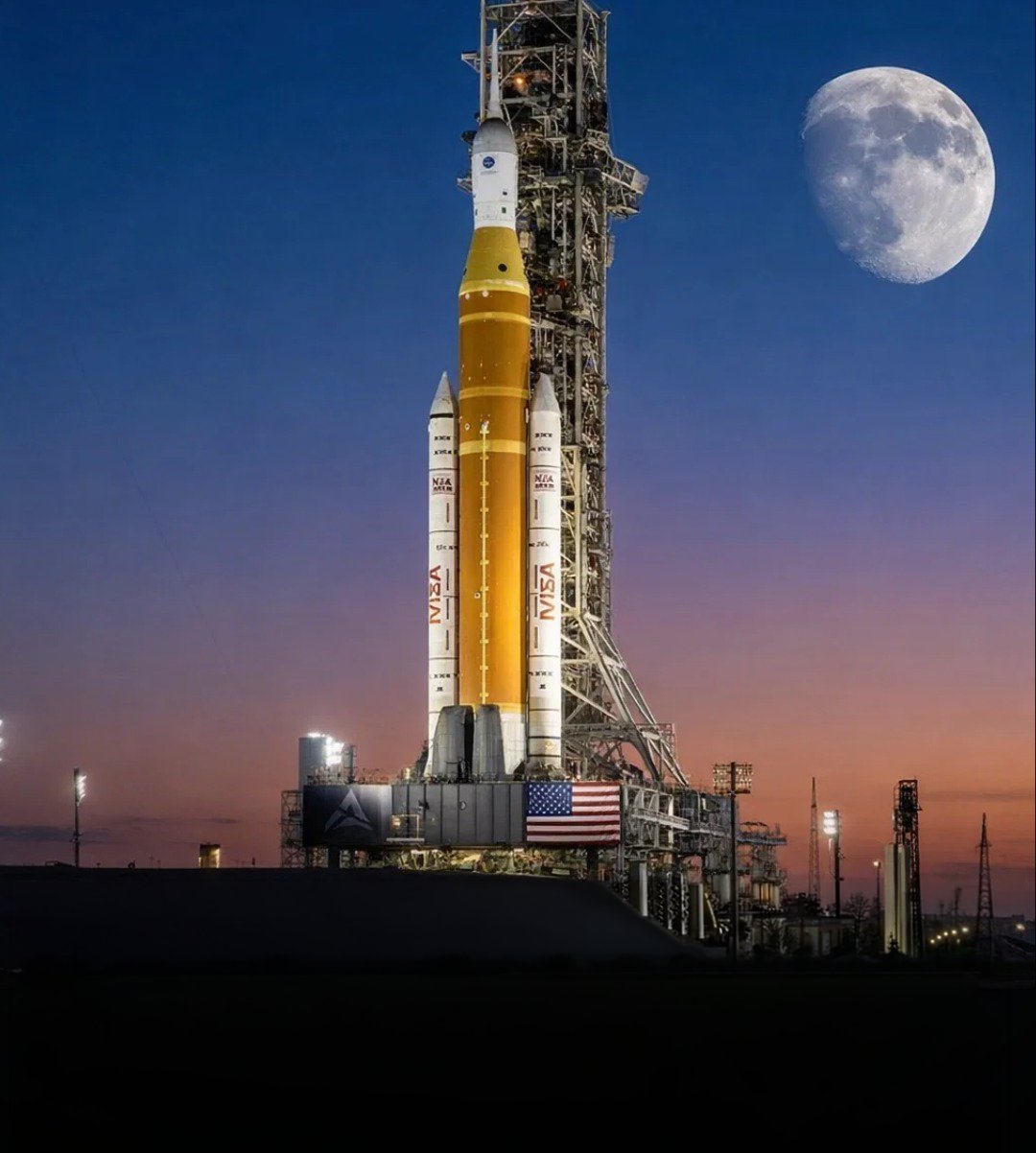
Just like the Apollo mission, Artemis II will be run from a mission control monitoring every instrument from here on Earth. How has it changed since the days of the space race?
The rocket scientists get the acclaim, the astronauts the glory but – when it comes to flying to the Moon – the real heart of the action can be found in a 1960s concrete office block in Texas.
Nasa's Christopher C Kraft, Jr Mission Control Center on the outskirts of Houston is named after the man who came up with the concept at the dawn of the space age. Kraft's idea was to bring together, in a single room and under the direction of a flight director, all the people responsible for the spacecraft.
The original mission control that oversaw the first Moon landing and brought us the phrase "failure is not an option," after a section of the Apollo 13 spacecraft exploded on the way to the Moon, is now preserved as a US National Historic Landmark – ashtrays, coffee cups and all. (You can read more about the restoration here.)
But across the hall is the modern equivalent for 21st-Century lunar missions: Artemis mission control and the purpose is essentially the same.
Views: 37 • Published: 2026-03-28 21:09:52